Journaling for anxiety: how talking it out helps
Updated June 2026
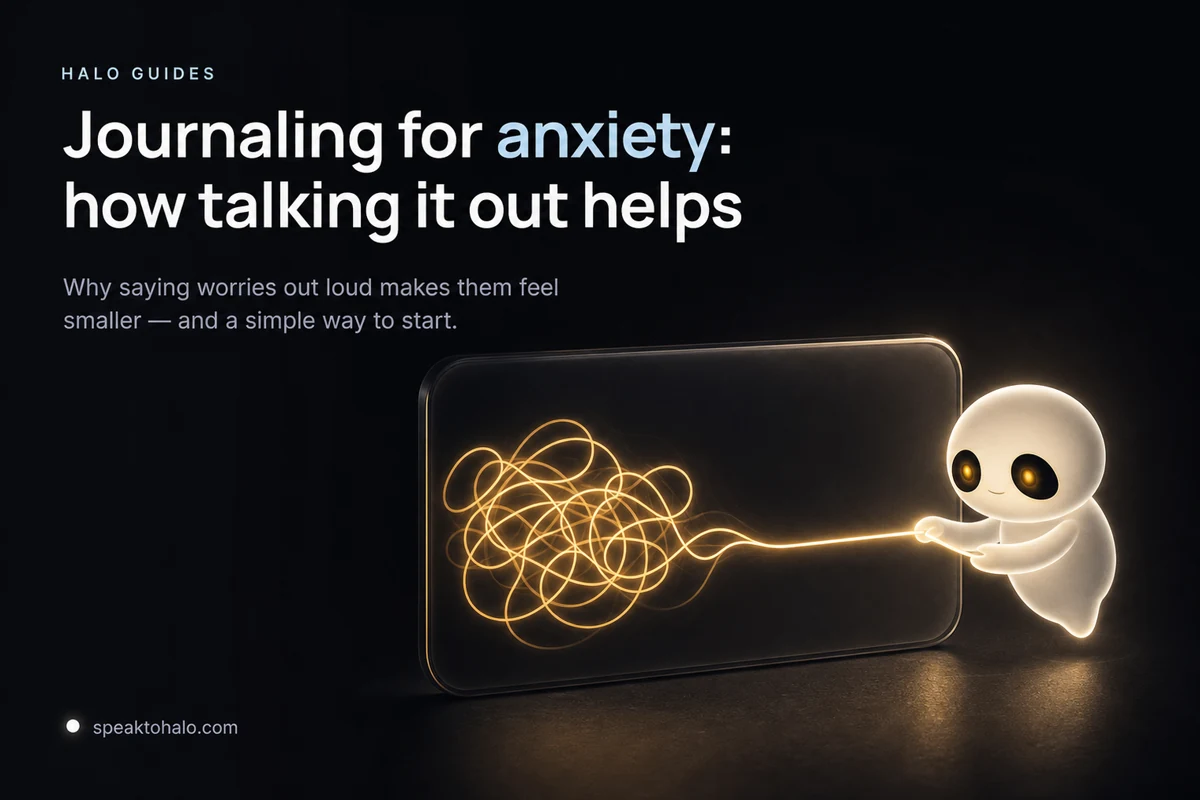
When you're anxious, thoughts loop. Journaling — especially out loud — gives the loop somewhere to go. Here's why it helps and how to start, even on the days the blank page feels impossible.
Why anxiety loops — and why words break the loop
Anxiety tends to run in circles: the same worry, slightly reworded, again and again. Part of why it loops is that it stays vague. Putting the worry into a specific sentence — out loud or on paper — forces it to take a shape, and a shape can be examined in a way that fog can't.
Research on expressive writing links regularly naming feelings to lower stress for many people. Saying it out loud adds something else: you hear yourself, which often makes a fear sound smaller than it felt inside your head. If the loop is one awkward meeting or argument, use the more specific guide to stop replaying a conversation in your head. If everything gets louder after dark, see what helps when your mind won't slow down at night.
A simple way to start
You don't need a technique. Try this: say out loud what you're anxious about, then answer two questions — "what exactly am I afraid will happen?" and "how likely is that, really?". Naming the specific fear and checking it against reality is the core of how a lot of anxiety support works.
Why voice helps when you're anxious
When you're wound up, sitting down to write can feel like one more demanding task. Talking is lower-effort — you can do it walking, lying down, or with your eyes closed. With Halo, you just talk; it listens, asks one gentle question, and turns it into an entry you can look back on to see that most of what you feared didn't happen. If you're not sure what to say, borrow from our list of voice journal prompts.
Important
Journaling can help you process everyday anxiety, but it is not treatment for an anxiety disorder and does not replace professional care. If anxiety is affecting your daily life, please talk to a qualified professional. If you're in crisis, contact a local emergency line.
FAQ
Does journaling help with anxiety?
Many people find that naming anxious thoughts — especially out loud — makes them feel smaller and clearer, and research links regular expressive writing to lower stress. It's a helpful practice, not a substitute for professional treatment of an anxiety disorder.
What should I write when I'm anxious?
Name the specific fear ("what exactly am I afraid will happen?") and check it against reality ("how likely is that, really?"). With Halo you can just say it out loud and let it ask the follow-up.
Keep reading
5 anxiety journal prompts: the same structure, every time
Five repeatable prompts for anxious days — what to write when, and why saying it out loud can work even better.
No one to talk to at 2am? What actually helps when your mind won't slow down
Why racing thoughts get louder at night, what genuinely helps, and how talking out loud can quiet the loop.

What to talk about in a voice journal: 30 prompts
Stuck on what to say? 30 simple prompts to get you talking — about your day, your feelings, decisions, and gratitude.